Posts

Budget Facts and Types of Budgets
Image
Budget Facts and Types of Budgets Budget Facts and Types of Budgets 1. The financial year in India is from 1 April to 30 March. 2. In the Budget , the government presents the details of these items - income and information, loans, advances, etc. 3. Earlier only one Budget was presented in India. Railway budget was not presented separately before. From 1921, the budget was divided into two parts- General Budget,  Second Rail Budget . 4. The Railway Budget is presented by the Railway Minister to the Lok Sabha on a day in the third week of February every year and the General Budget is usually presented by the Finance Minister on the last working day of February month at 5:00 p.m. 5. The Finance Minister has a speech while presenting the budget. After this, a copy of the budget is laid on the table of the Rajya Sabha. After this, the minister presents the finance bill or budget and the house is adjourned. 204. (2) The Budget shall be presented to the House in...
SLR (Statutory Liquidity Ratio)

Image
SLR (Statutory Liquidity Ratio) SLR (Statutory Liquidity Ratio) is used by RBI like Repo Rate, Reverse Repo Rate, CRR etc . Does The only difference between Cash Reserve Ratio(CRR) and Statutory Liquidity Ratio(SLR) is that the CRR remains in the cash form with the RBI and the bank has to keep it in the form of SLR gold or government approved securities. Keeping more gold by the bank will reduce the bank's credit and keeping it low will increase its credit. When the RBI increases the SLR, the bank will have less money to lend us. Currency in the market will decrease. Inflation will decrease. But in exams it is often asked what is the effect on interest rate due to increase or decrease of SLR, CRR. So understand this with an example. Suppose you have Rs. 100 crores. AAP Manmohan Singh Rs. 100 crores, saying that after a month I get Rs. Returning 101 crores because I take interest at the rate of 1% (1% of Rs. 100cr = 1 crore — 100cr + 1cr = Rs. 101cr) Mannohan j...

Repo Rate, Bank Rate, Reverse Repo Rate

Repo Rate, Bank Rate, Reverse Repo Rate The terms glossary of repo rate, bank rate, reverse repo rate (reverse rate, bank rate and reverse repo rate) are very similar to each other. And the definitions given in books, internet, make it difficult to understand anything. (I will try to make you understand these stuffs in a simple way, in a layman language) Commercial banks often require large sums of money for daily economic operations. For this, the most common option that commercial banks adopt is to borrow from the central bank (Reserve Bank of India). On this loan, the Reserve Bank has to pay some special interest to them. Do you understand? Okay, let's tell you again. Commercial banks are in need of a short-term loan whenever there is a shortage of funds or if they need another short-term loan. (Reserve Bank of India). When the Reserve Bank of India lends money to these banks, it wants some securities from the banks in exchange for cash, so that if there is any futur...

Non-Performing Asset(NPA)

Image
Non-Performing Asset(NPA) Non-Performing Asset(NPA)     In simple words, when the bank gives a loan to a person, sometimes it happens that the person taking the loan is not able to make regular payment to the bank. Then the bank sends him a notice that brother, you see your own, otherwise the legal action will be taken against you… yet the man does not pay or is able to make it. Now, what action did the bank take against him?But we are going to talk about NPA, so we will talk about NPA. When that man fails to repay the money / interest to the bank, the bank declares that loan as Non-Performing Asset (NPA) (= Bad Loan). You will be surprised to know that as of now there is more than 1 lakh crore NPAs in India. Debt Recovery Tribunals Before the 90s, the bank had to face a lot of difficulties in recovering bad loans. Because most of the loan-taking banks had some reaction, before that they used to put the cases on the reverse banks that I was unfair, the loan was g...

Balance of Payment(BoP)

Image
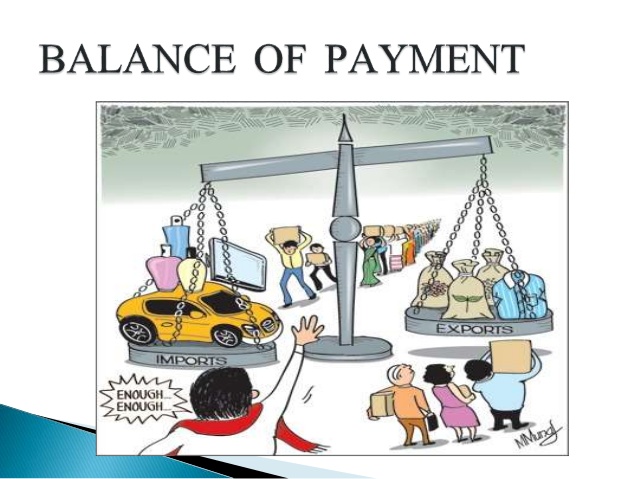
Balance of Payment(BoP) Balance of Payment(BoP) If you want to see the cash coming in and going to a company, then you have to look at the account book of that company. Similarly, if we want to know the flow of cash coming in and going out of the country, then for this we have to see the account balance sheet of the country. The Balance of Payment (BoP) has two parts.  Current Account and  Capital Account According to the IMF, there are three parts of the balance of payments -  Current Account,  Capital Account and  Financial Account.  Without getting into the technical aspects of this topic, let's try to understand it simple. Current account 1. The details of imports and exports remain (it is always negative because we import more than exports; Import> Export = trade deficit). 2. Details of income coming from abroad (amount of interest paid to Indian investor, interest received from FDI / FDI). 3. Transfer (gift, money sent ...

Section 7 of RBI Act - RBI Act Explained

Section 7 of RBI Act - RBI Act Explained Role (Section 7 of the RBI Act) At the time of hearing an appeal in the Allahabad High Court, a case of use of Section 7 (Section 7) of the Reserve Bank of India Act emerged. The suit was filed by the Independent Power Producers Association of India and challenged a circular issued by the Reserve Bank of India (RBI) on 12 February. In the course of hearing, the High Court had made a comment in August that the government may give directions (directions) to the Reserve Bank of India under Section 7 of the RBI Act. In view of this order of the court, the Government had given a letter to the Governor of the Reserve Bank of India, asking him his intention regarding the exemption given to the energy companies in the context of the circular dated February 12. Apart from this, on October 10, the government had also asked the Governor of the Reserve Bank of India to use the RBI's capital reserves to bring in liquidity. What is SECTION 7 O...

History of Bank Mergers

History of Bank Mergers Today we will read about the bank merger in this article and learn what has been the history of bank mergers and acquisitions in India. When an economy becomes obliged to merge banks, it will also try to know. Right now the topic of Bank Merger is very much discussed. In this article, we will try to know what the PCA Framework is and what rights of Indian banks the RBI gets after coming into the PCA framework.  Role In 1969, the Indira Gandhi government changed the picture of the banking sector of the country. First 14 and then in 1980 some more private banks were made government. There is no doubt that after the acquisition of banks, bank system reached remote areas and people and people got a strong and reliable system of savings and government relief. But now these government banks are facing trouble. As of December 2017, about 9 lakh crore rupees in these Indian banks. More than NPA has been done, which is breaking the back of public sector bank...